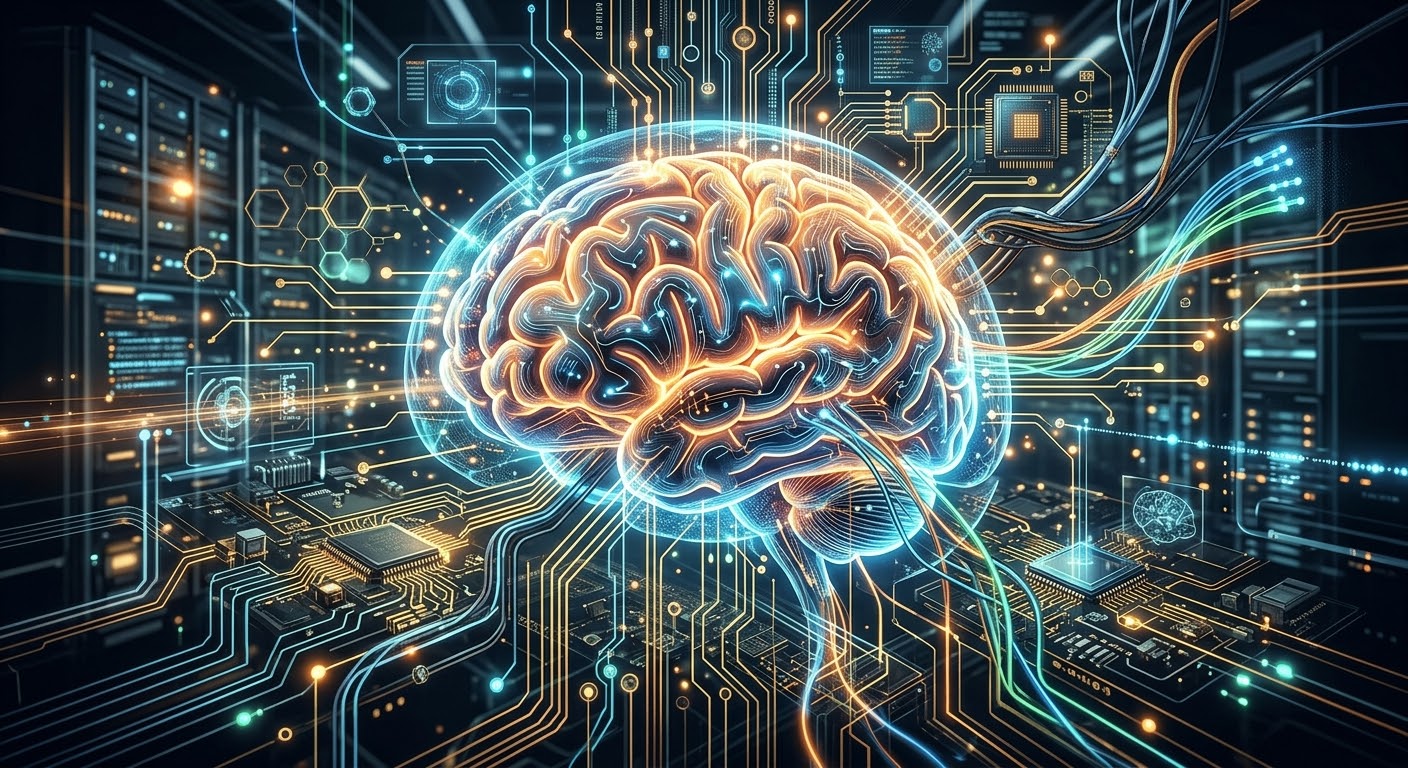
Artificial intelligence, often called IA, means a set of technologies capable of carrying out certain tasks which usually require human intelligence.
It can analyse information, recognise images, understand text, translate a language or propose recommendations. The goal is not necessarily to create a conscious machine, but rather automate certain tasks and help users on a daily basis.
How does artificial intelligence work?
An AI system usually works with three main elements: data, algorithms and a model. The data can be text, images, sounds, numbers or videos.
The algorithm analyses this information in order to detect trends or regularity. The system can then produce a result, such as recognizing an image, answer a question or recommend content.
Integrated image in the body
What is machine learning?
Machine learning, also known as machine learning, is the main branches of artificial intelligence.
Instead of manually programming all the rules, the system is provided many examples. IA analyses these examples in order to discover and to use what she has learned about new situations.
For example, to recognize a cat in a photo, a model can receive several thousand images identified as representing a cat or another animal. He then learns to identify certain characteristics specific to cats.
The role of neuron networks
Neuron networks are inspired computer models, the functioning of the human brain. There are several layers capable of transforming and analysing information.
Deep neuron networks, also known as deep learning, are used to recognize images, understand speech, translate and generate content.
IIA in everyday life
Even without knowing it, many people already use intelligence Every day. It is integrated into many applications and digital platforms.
Second image embedded in the body
- Recommendations:video, music and business platforms offer content according to your interests.
- Virtual assistants:they can understand certain voice commands and respond to simple questions.
- Machine translation:IA helps to translate phrases and documents quickly.
- Email filtering:it can identify unwanted or potentially dangerous messages.
- Image recognition:It can detect objects, faces or certain visual characteristics.
What are the limits of AI?
Artificial intelligence is powerful, but it is not perfect. It depends heavily on the quality of the data used for training.
If the data are incomplete or biased, the results may be incorrect or unjust. An AI can also produce a response convincing, but false.
To be noted: an AI response must be where it concerns an important decision, sensitive or a subject that requires great precision.
How to use AI responsibly?
- Check the important information provided by an AI.
- Avoid sharing personal or confidential data.
- Compare answers with reliable sources.
- Keep human control over important decisions.
Conclusion
Artificial intelligence brings together technologies capable of analysing data and perform different tasks automatically. She's already present in many aspects of our life.
To take full advantage of it, it is important to understand its functioning, know its limits and use it critically.
Call for actionLooking for an artificial intelligence tool tailored to your needs?
Discover our directory IA